Price Parity Toolkit
The Price Parity Toolkit (PPT) was designed to help bridge the price gap between next-gen* and conventional materials. This industry-supported framework, with catalytic funding from Laudes Foundation and developed by Fashion for Good with support from Canopy, Finance Earth and select brands and fibre producers, introduces a financing mechanism. This mechanism aims to decouple price premiums early in the supply chain, thereby enabling the adoption and scaling of lower-impact materials.
Problem Statement
The fashion industry needs urgent solutions to transition to lower-impact materials, but a major barrier for commercial scale adoption remains: price.
While next-gen materials hold environmental promise, most are still on their journey to scale and as such, have attached price premiums – which can be seen as transition costs – that make them more expensive than their conventional counterparts. In order to achieve commercial scale, these materials require investment, volume adoption and time.
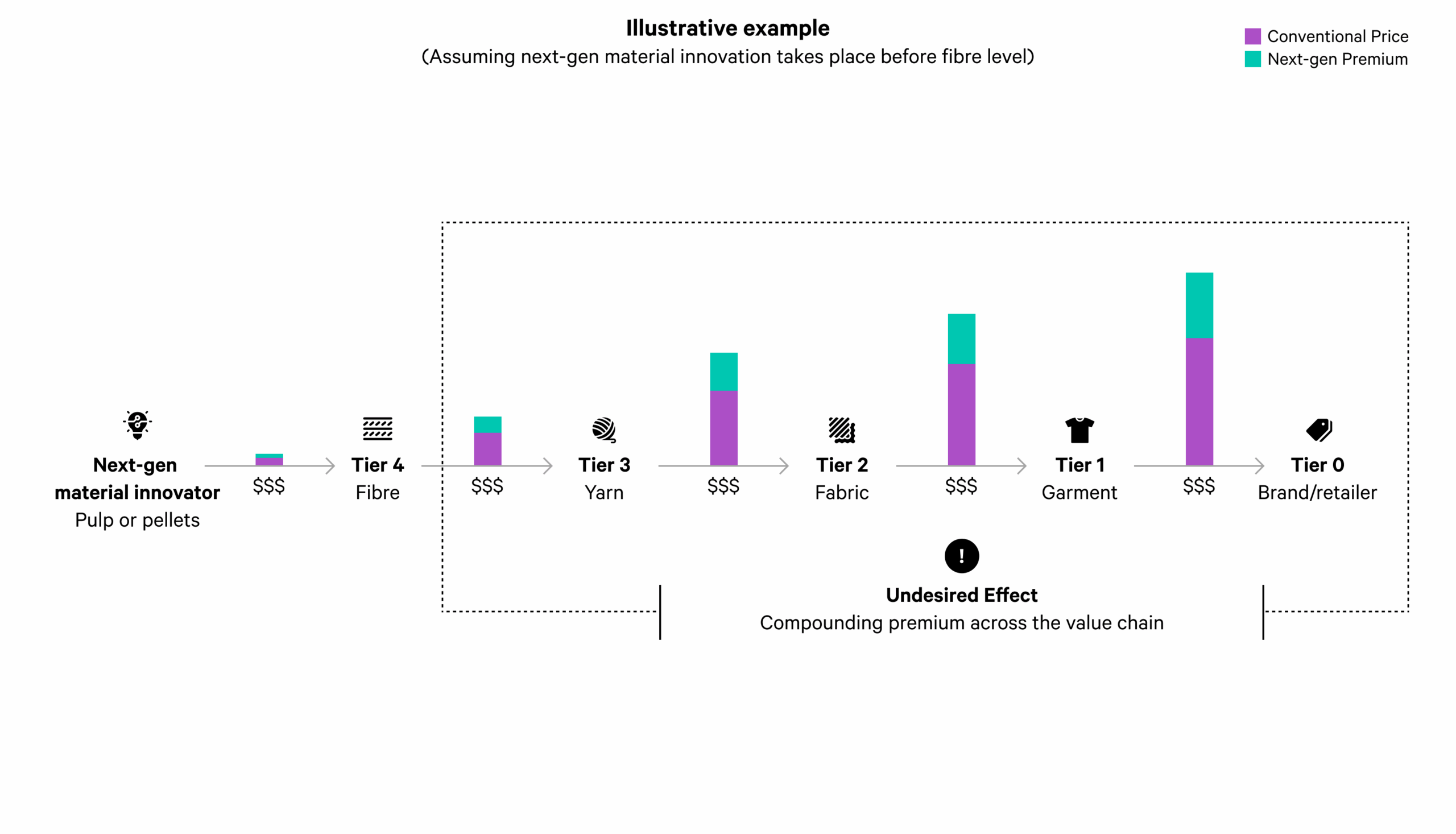
Without intervention, the industry risks stagnation, and the adoption of next-gen materials is slowed by fragmented demand and compounding supply chain markups.
How it works





Price Parity Toolkit Mechanism
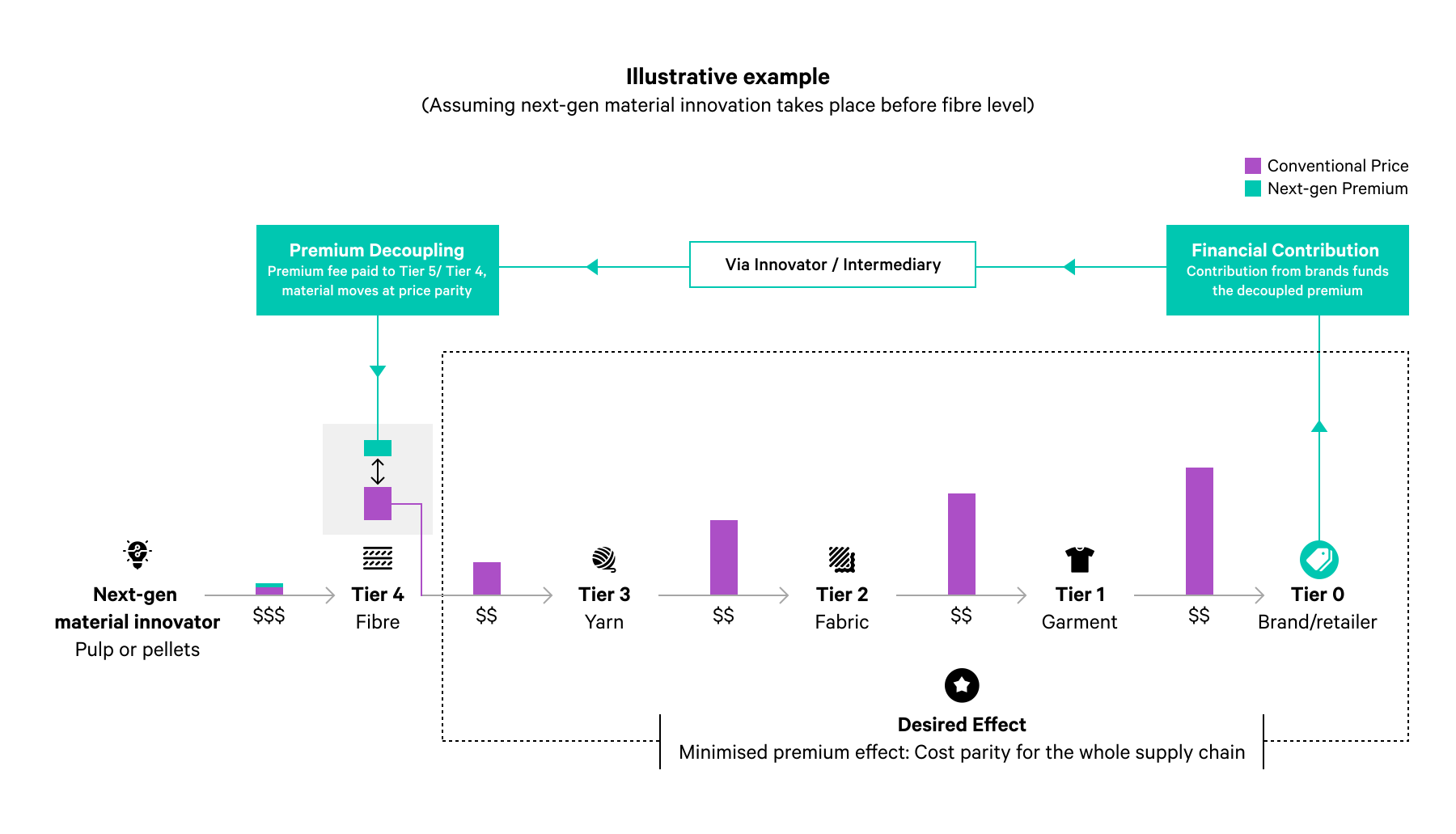
The Price Parity Toolkit (PPT) tackles the pricing hurdle and unlocks scale through its core tool: premium decoupling. This financial mechanism separates the price premium of next-gen materials at an early stage of the supply chain.
How the Mechanism Works
The premium associated with next-gen materials is paid by the brand as a separate financial contribution to earlier supply chain stages (e.g., at Tier 4 or Tier 5). This payment is routed via the innovator or an intermediary. This strategic decoupling allows the next-gen material to move through all subsequent tiers at the same price as conventional alternatives, achieving price parity.
Why Decoupling is Essential
Without the PPT, the initial material premium (Innovation and Integration premiums) would be amplified (compounded) throughout the supply chain, leading to compounded high costs and artificial markups on the final product at Tier 0. The decoupling mechanism prevents this amplification, resulting in a total cost that is lower than if the premium were carried through to the end. This approach avoids the magnification of innovation and integration costs, thereby mitigating unjustified ‘sustainability premiums’ while still compensating for genuine higher-cost processes.
Implementation and Cost
Brands assume this cost based on the materials sourced, often funding it directly at the innovator. Brands who utilise internal dedicated funds (e.g., innovation budget) outside of their sourcing budget benefit by maintaining undisturbed product and sourcing margins.
The guidance contains a step-by-step guide for brands, innovators, and suppliers interested in operationalising the PPT mechanism and an overview of legal and tax considerations. Example agreements are available on the Price Parity Toolkit website.
Key Outcomes
-
Reduced total cost of product
By decoupling the premium at an early stage, the product is expected to move through the supply chain at price parity. With the price premium amplification effect reduced or eliminated, the cost of the product as it reaches the brand is expected to be significantly lower or at cost parity with conventional.
-
Product & sourcing teams margin targets not affected
Given the price parity of the product, brands can integrate next-gen materials without disrupting their sourcing processes from a financial perspective. The financial contribution toward the premium can be managed through separate internal budgets or specialised funds (e.g. innovation, sustainability, marketing).
-
Potential for increased manufacturing optimisation
With the demand from brands due to the predicted effects of the premium decoupling mechanism (reduced costs and easier sourcing), manufacturers can optimise their processes for next-gen materials, further allowing reduction in premiums.
-
Accelerated trajectory to price parity
As demand increases and manufacturing adjusts across the value chain, scaling operations helps innovators improve efficiency and achieve economies of scale. Over time, this effect should reduce the financial contribution required from brands.
Ecosystem Partners




* Next-gen materials are innovative materials with desired improved environmental outcomes aiming to solve complex sustainability and circularity challenges faced by the industry. For a full definition, please check our Executive Guide report.
Relevant Resources
Future Forward Factories
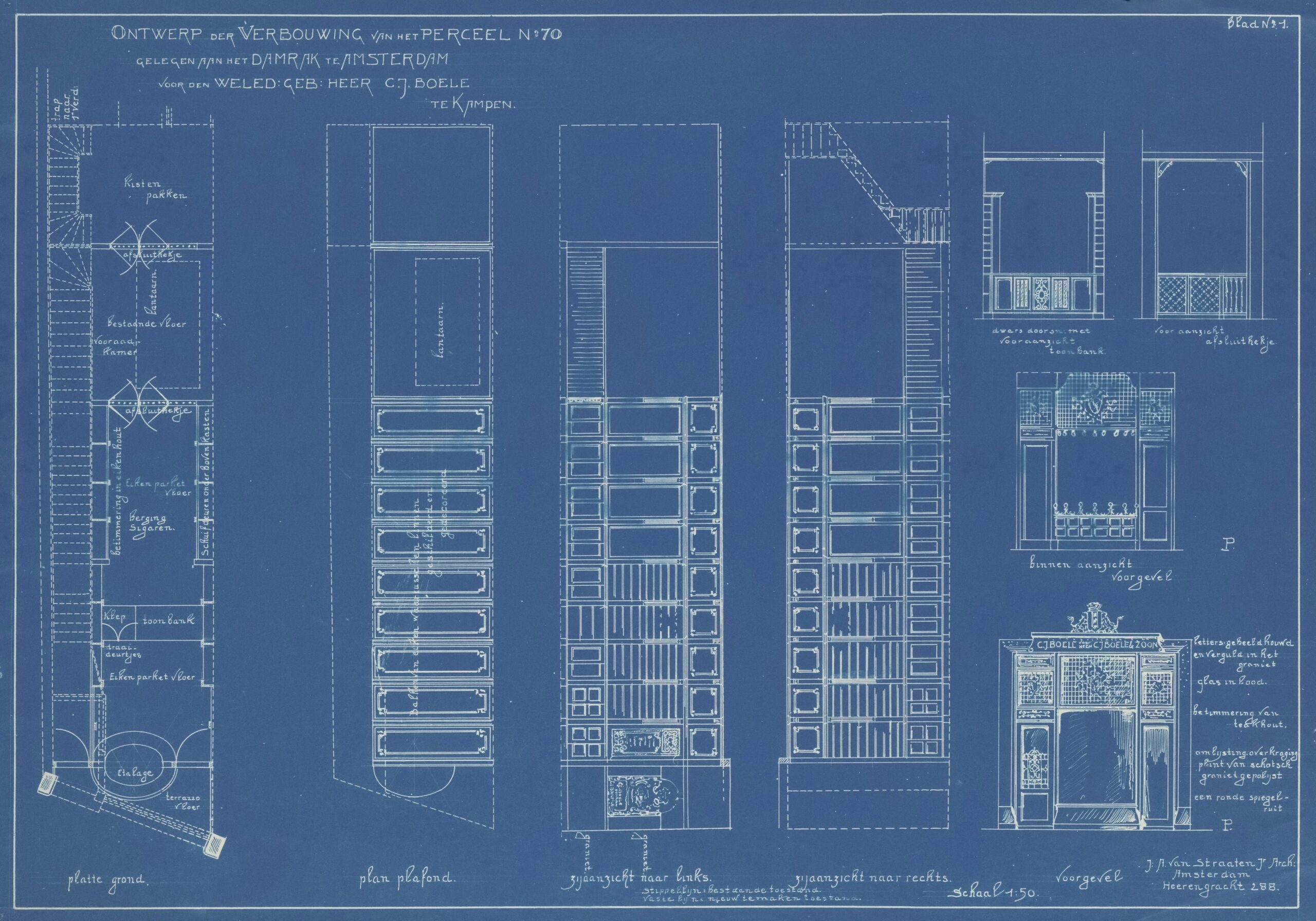
The “Future Forward Factories” project, initiated by Fashion for Good, focuses on transforming tier 2 processing in the textile industry through innovative low-impact, decarbonisation solutions. It aims to generate actionable blueprints for factories of the future that combine renewable energy and technology upgradation including mostly dry processing innovations. These blueprints take into account the macro geographical factors that are customised for every product to achieve next-zero facilities with a strong return on investment. The blueprint also takes into account the Just Transition lens to ensure that the transitioning from a conventional to Future Forward Factories is inclusive and people-centric.

Fiber Club
Fashion for Good’s Fiber Club unites brands and innovators to fast-track the use of sustainable materials in the fashion sector. These partnerships offer brands early access to cutting-edge fibres, ensuring beneficial supply agreements and easier incorporation into their supply chains. Fiber Club aims to not only shift the cost structure but to help align brands in a very fragmented and competitive industry.
Unlocking the Trillion-Dollar Fashion Decarbonisation Opportunity
The fashion industry is at a pivotal moment in its journey toward sustainability. With greenhouse gas emissions contributing significantly to global climate change, urgent action is needed to decarbonise supply chains. This report, developed by Fashion for Good in collaboration with the Apparel Impact Institute, outlines existing and innovative solutions to reduce emissions, unlock financing opportunities, and create a pathway to net zero by 2050. Through deep industry insights and financial analysis, this report serves as a guide for brands, manufacturers, policymakers, and investors committed to driving meaningful change.

Financing the Transformation in the Fashion Industry: Unlocking Investment to Scale Innovation
The fashion industry is at a critical juncture. With sustainability commitments and innovation accelerating, the challenge remains in scaling breakthrough solutions. This report, developed by Fashion for Good in collaboration with Boston Consulting Group, delves into the financial mechanisms needed to drive transformation and bring innovative solutions to commercial scale. By addressing key investment barriers and highlighting actionable pathways, this report serves as a call to action for stakeholders across the value chain to collaborate and unlock capital for meaningful impact.
The Great Unlock: closing the innovation commercialisation gap through project finance solutions
The fashion industry stands at a crucial juncture, with innovation paving the way for a more sustainable future. Over the past decade, we have witnessed significant strides in brand commitments, regulatory frameworks, and technological advancements. However, despite these positive trends, scaling these innovations remains a formidable challenge. “The Great Unlock” explores the essential role of project finance as a key enabler in bridging the commercialisation gap, ensuring that groundbreaking solutions can transition from concept to industry-wide implementation.
Other Projects

The Next Stride: Bio-based Materials for Footwear Soles
“The Next Stride: Bio-based Materials for Footwear Soles” aims to validate the performance and environmental impact of bio-based polymers as sustainable alternatives to the fossil fuel-derived materials currently used in footwear soles. The objective is to collectively de-risk the transition to these “next-generation” materials by rigorously testing their technical properties and assessing environmental benefits. Ultimately, the purpose is to accelerate the adoption of these bio-based solutions and pave the way for a more sustainable footwear industry.

Beyond50 Denim: Combining Cottonised Hemp And Green Chemistry
“Beyond50 Denim: Combining Cottonised Hemp And Green Chemistry” aims to validate the performance and environmental impact of cottonised hemp processed with green chemistry to act as a true alternative to cotton in denim applications. The project goal is to evaluate the performance of SEFF’s cottonised hemp fibre in combination with Fibre52’s bio-friendly chemistry solution within denim fabric applications with a total hemp content of 50% and above. The fabrics will be benchmarked against conventional 100% cotton denim with a specific focus on handfeel and aesthetic characteristics.
Fiber Club
Fashion for Good’s Fiber Club unites brands and innovators to fast-track the use of sustainable materials in the fashion sector. These partnerships offer brands early access to cutting-edge fibres, ensuring beneficial supply agreements and easier incorporation into their supply chains. Fiber Club aims to not only shift the cost structure but to help align brands in a very fragmented and competitive industry.